Hyperliquid Labs is registered in Singapore and contributes to the decentralized Hyperliquid blockchain. Here’s what MAS has said about its regulatory status. | Credit: CCN.com
Share
Key Takeaways
Hyperliquid has surpassed $1 billion in cumulative protocol revenue, reaching the milestone in less than two years.
HYPE’s tokenomics remain a key strength, with about 91% of protocol revenue coming from trading fees.
Hyperliquid continues to dominate the decentralized perpetual futures market, controlling roughly 70% of DeFi perp trading volume.
Hyperliquid has crossed a milestone that few decentralized finance protocols have achieved.
Less than two years after launching, the decentralized perpetual futures exchange has generated more than $1 billion in cumulative protocol revenue, fueled by surging trading activity on its proprietary blockchain.
The achievement comes despite a challenging macroeconomic backdrop marked by inflation, geopolitical uncertainty, and prolonged volatility in crypto markets.
Our Top Crypto Sports Betting Partners:
Sponsored
Disclosure
We sometimes use affiliate links in our content, when clicking on those we might receive a commission at no extra cost to you. By using this website you agree to our terms and conditions and privacy policy.
Perpetual futures have become one of crypto’s fastest-growing trading products, allowing investors to speculate on price movements with leverage without worrying about contract expiration dates.
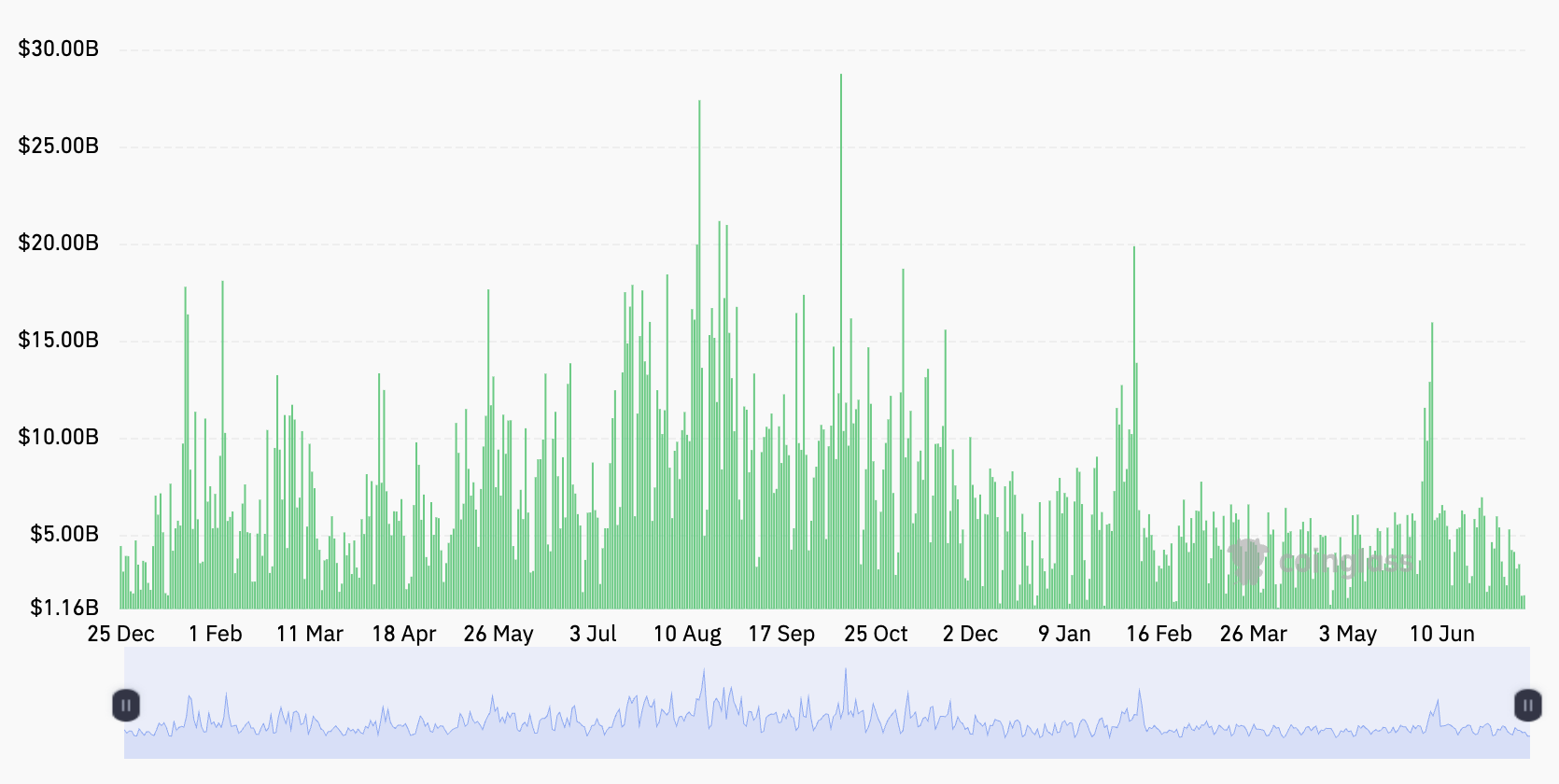
During the 30 days ending July 7, the protocol processed more than $210 billion in perpetual futures volume, cementing its position as the dominant decentralized venue for perpetual trading.
Hyperliquid futures volume history. | Credit: CoinGlass
What differentiates Hyperliquid from many competing protocols is how that activity feeds directly into the economics of the HYPE token.
Approximately 91% of protocol revenue comes from perpetual trading fees, and around 99% of that revenue is allocated to an on-chain buyback mechanism that continuously purchases HYPE on the open market before permanently burning the tokens.
The result is a deflationary model that resembles a corporate share buyback. Higher trading volume generates more protocol revenue, which increases token purchases and reduces circulating supply over time.
So far, roughly 4.7% of HYPE’s maximum supply has already been burned, creating a direct link between platform growth and token value.
For investors seeking exposure to the expanding perpetual futures market, few crypto assets offer such a straightforward connection between business performance and tokenomics.
Growth Remains Strong, but Competition Is Intensifying
Hyperliquid’s momentum remains impressive.
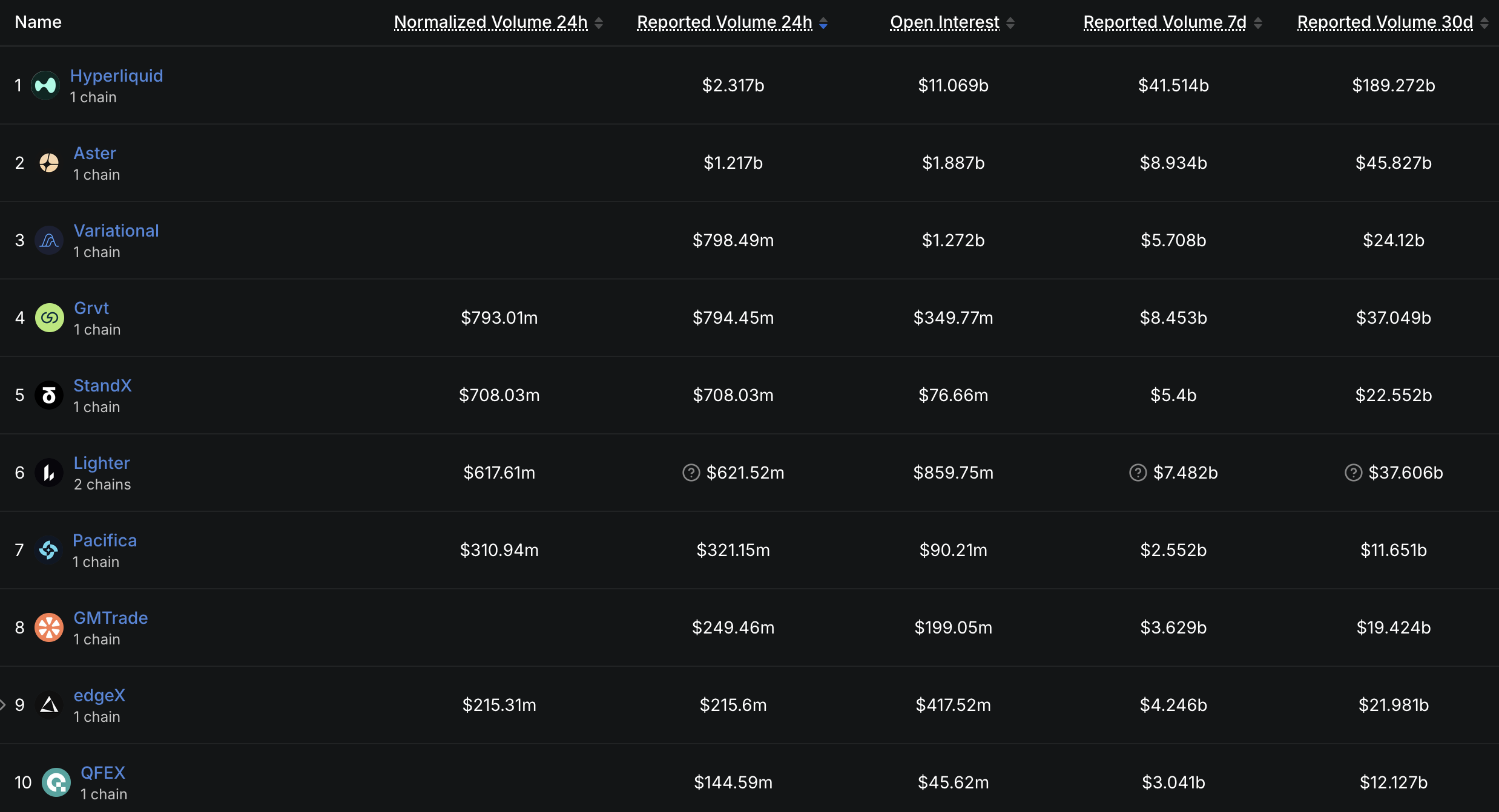
The protocol now accounts for roughly 6.2% of global perpetual futures trading volume, up from approximately 4% at the beginning of 2026.
Within decentralized perpetual exchanges, its dominance is even more striking, with an estimated 70% market share.
Global perpetual futures trading volume ranking.| Credit: DeFiLlama
However, maintaining that lead may become increasingly difficult.
New decentralized competitors such as Lighter and Aster are targeting the same market with alternative trading infrastructure and incentives designed to attract liquidity away from Hyperliquid.
Every percentage point of market share lost would slow protocol revenue growth and reduce the pace of HYPE buybacks.
Regulation also represents an emerging challenge.
Hyperliquid currently avoids serving US users because of regulatory uncertainty surrounding crypto derivatives.
At the same time, regulated perpetual futures products are emerging in the US following recent approvals from the Commodity Futures Trading Commission, potentially giving compliant domestic platforms a new avenue to capture trading volume.
While these developments are unlikely to threaten Hyperliquid‘s leadership overnight, they highlight that the protocol’s competitive advantage may narrow as institutional participation grows.
Can HYPE Continue Outperforming?
From a market perspective, HYPE presents a mixed picture.
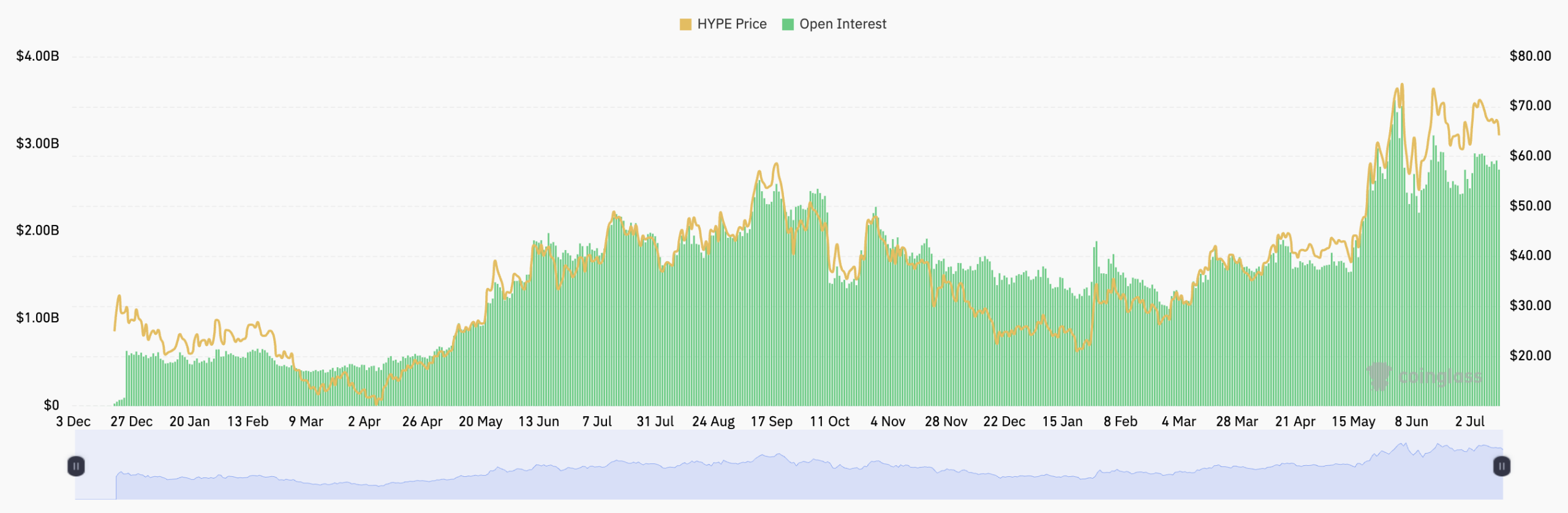
HYPE recently slipped below a key ascending trendline and is testing support near its 50-day exponential moving average around $63.
Momentum indicators, including the Relative Strength Index (RSI) and MACD, have softened, suggesting sellers currently hold the short-term advantage.
Still, the bigger investment thesis remains largely unchanged.
Hyperliquid has built one of crypto’s fastest-growing revenue-generating businesses. And its tokenomics continue to align protocol success with HYPE holders through automated buybacks and token burns.
Disclaimer:
The information provided in this article is for informational purposes only. It is not intended to be, nor should it be construed as, financial advice. We do not make any warranties regarding the completeness, reliability, or accuracy of this information. All investments involve risk, and past performance does not guarantee future results. We recommend consulting a financial advisor before making any investment decisions.
Giuseppe Ciccomascolo began his career as an investigative journalist in Italy, where he contributed to both local and national newspapers, focusing on various financial sectors.
Upon relocating to London, he worked as an analyst for Fitch's CapitalStructure and later as a Senior Reporter for Alliance News. In 2017, Giuseppe transitioned to covering cryptocurrency-related news, producing documentaries and articles on Bitcoin and other emerging digital currencies. He also played a pivotal role in establishing the academy for a cryptocurrency exchange website. Crypto remained his primary area of interest throughout his tenure as a writer for ThirdFloor.