XRP has fallen 50% despite Ripple's growing ecosystem. Explore how the $785 million RLUSD stablecoin could be boosting network activity. | Credit: CCN.com
Share
Key Takeaways
Ripple is targeting a $1 billion revenue run rate by the end of 2026.
CEO Brad Garlinghouse emphasized that the figure excludes XRP holdings on the company’s balance sheet.
Garlinghouse’s comments reinforce the separation between Ripple’s operating business and XRP’s market performance.
Ripple CEO Brad Garlinghouse has revealed an ambitious target for the blockchain payments company, saying Ripple expects to achieve a $1 billion annualized revenue run rate by the end of 2026, excluding any contribution from XRP holdings on its balance sheet.
The statement underscores Ripple’s efforts to position itself as a fintech infrastructure provider rather than a company whose fortunes are tied primarily to the performance of XRP.
The distinction comes amid years of debate over the relationship between Ripple’s operating business and the digital asset it helped develop.
The revenue target highlights Ripple’s growing focus on enterprise payments, stablecoins, custody, and financial infrastructure services as it seeks to expand beyond its traditional cross-border payments business.
Try Our Recommended Crypto Exchanges
Sponsored
Disclosure
We sometimes use affiliate links in our content, when clicking on those we might receive a commission at no extra cost to you. By using this website you agree to our terms and conditions and privacy policy.
Hidden Road Acquisition and RLUSD Expansion Drive Growth Strategy
Ripple has significantly broadened its product portfolio over the past year through a series of strategic initiatives. One of the company’s largest moves was its agreement to acquire prime brokerage firm Hidden Road for $1.25 billion in 2025.
The acquisition gives Ripple access to institutional services including credit, clearing, and prime brokerage solutions. Hidden Road processes approximately $3 trillion in annual clearing volume, providing Ripple with an established infrastructure platform serving large financial clients.
LATEST: 📈 Ripple CEO Brad Garlinghouse says the company expects to end 2026 with a $1B revenue run rate, not including the XRP on its balance sheet. pic.twitter.com/hNF20FBGUw
At the same time, Ripple has accelerated the rollout of its RLUSD stablecoin. The company has positioned RLUSD as a settlement and collateral asset for enterprise customers and has expanded its use cases beyond traditional payments.
Recent developments include integrating RLUSD into AI-powered payment systems and machine-to-machine transactions on the XRP Ledger.
Ripple’s newly launched XRPL AI Starter Kit enables AI agents to create wallets, manage balances, monitor transactions, and conduct payments using XRP and RLUSD through the x402 protocol with limited human intervention.
Beyond payments, Ripple continues to invest in custody, treasury management, and liquidity services aimed at banks, financial institutions, and corporate clients seeking regulated access to digital asset infrastructure.
XRP Demand Remains Separate From Ripple’s Revenue Goals
Garlinghouse’s emphasis on excluding XRP from the revenue target comes as investor interest in the token remains strong. XRP-linked investment products recently recorded their fifth consecutive week of inflows, attracting approximately $10.68 million during the week ending June 12, according to industry data.
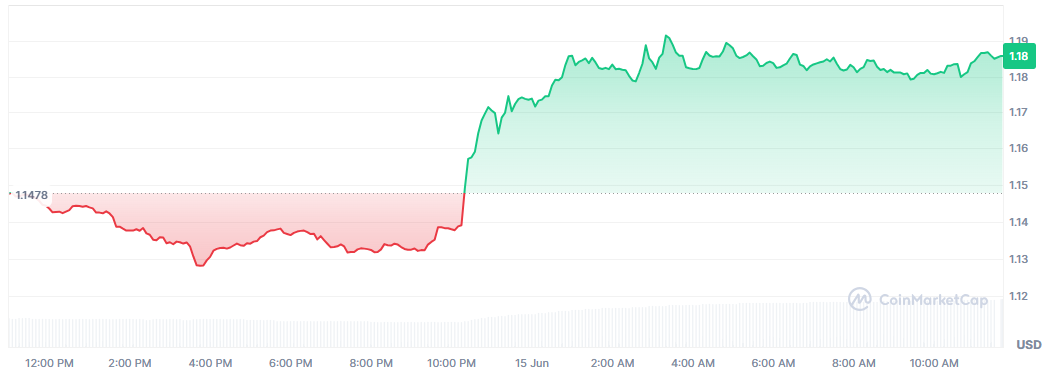
Meanwhile, XRP traded near $1.18 on June 15, demonstrating resilience despite broader market volatility.
The separation between Ripple’s operational revenue and XRP-related activity could provide institutional customers with a clearer framework for evaluating the company’s business performance.
Rather than relying on XRP appreciation, Ripple is increasingly focused on generating recurring revenue through software, payments infrastructure, liquidity solutions, and enterprise financial services.
The strategy also aligns with growing demand from banks and corporations seeking blockchain-based settlement systems without direct exposure to cryptocurrency price fluctuations.
XRP Price Shows Early Recovery Signs Despite Broader Downtrend
While Ripple pursues its long-term growth objectives, XRP is showing signs of stabilization after months of market pressure.
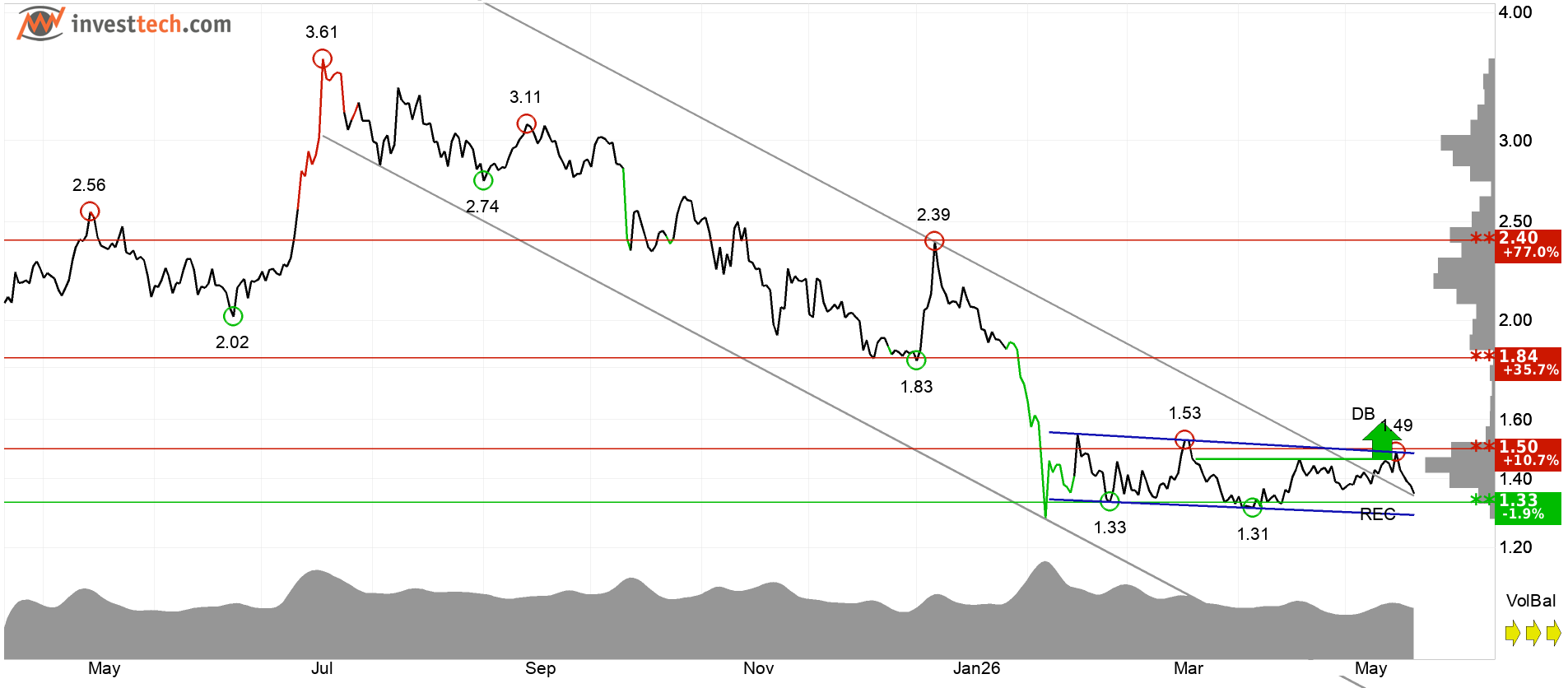
On the daily chart, XRP continues to hold above the critical $1.05-$1.15 support zone. Analysis identifies a bullish divergence between price action and the Relative Strength Index (RSI), a technical signal that often suggests weakening selling pressure and the potential for a trend reversal.
XRP has established a series of higher lows. | Credit: InvestTech
In the shorter term, XRP has established a series of higher lows on the four-hour timeframe while maintaining support above an ascending trendline. Immediate resistance is located between $1.18 and $1.21, with a successful breakout potentially opening the door toward $1.25.
A more significant hurdle remains between $1.27 and $1.30, where several key Fibonacci retracement levels converge. Reclaiming that area would strengthen the bullish case and improve market sentiment.
Although XRP remains in a broader corrective phase, improving technical indicators, recovering network activity, and expanding utility within Ripple’s ecosystem suggest the token could be positioning for a stronger recovery if key resistance levels are broken in the coming weeks.
Giuseppe Ciccomascolo began his career as an investigative journalist in Italy, where he contributed to both local and national newspapers, focusing on various financial sectors.
Upon relocating to London, he worked as an analyst for Fitch's CapitalStructure and later as a Senior Reporter for Alliance News. In 2017, Giuseppe transitioned to covering cryptocurrency-related news, producing documentaries and articles on Bitcoin and other emerging digital currencies. He also played a pivotal role in establishing the academy for a cryptocurrency exchange website. Crypto remained his primary area of interest throughout his tenure as a writer for ThirdFloor.












 Why SWIFT’s Blockchain Push Is a Win for Ripple but Not Yet for XRP